Loi Krathong: The Real Way Thai People Celebrate (Not What You See on Instagram)
A Local Teen’s Guide to Thailand’s Most Romantic Festival + How We’re Saving Our Rivers
Every year on the full moon of the 12th lunar month (usually November), I watch tourists launch their store-bought foam krathongs and immediately leave, missing the entire point of our festival. This is the story of the REAL Loi Krathong – what it means, where locals actually go, and how young Thais are revolutionizing this ancient festival to save our environment.
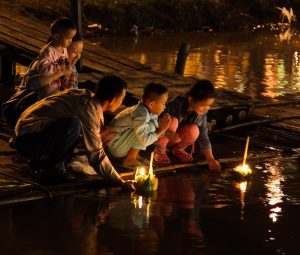
🌙 What Loi Krathong Actually Is (Spoiler: It’s Not Just Pretty Floating Things)
Loi Krathong happens on the full moon night of the 12th month in the traditional Thai lunar calendar. “Loi” means to float, and “Krathong” is the small raft we make. But here’s what tourists don’t understand – it’s not about the krathong itself. It’s about what you’re releasing.
We float krathongs to pay respect to Phra Mae Khongkha (the water goddess), to apologize for polluting water throughout the year, and to let go of anger, grudges, and negative thoughts. The irony of using foam krathongs that pollute the water while apologizing for pollution is not lost on us young Thais. Trust me, we cringe hard.
🌊 The Environmental Crisis We Need to Talk About
Here’s what’s actually happening now, and why my generation is leading the change:
The New Thai Way: Eco-Friendly Celebrations
1. One Family, One Krathong Movement: Instead of everyone buying individual krathongs, many Thai families now share one beautifully made natural krathong.
2. “Virtual” Loi Krathong: Some temples and communities now have permanent “krathong pools” where you place your krathong, make merit, take photos, then volunteers retrieve it for the next person. Same spiritual benefit, zero waste!
3. DIY Natural Krathongs: Young Thais are going back to basics. We organize workshops teaching people to make krathongs from bread (fish can eat it!), ice (melts away), or traditional banana trunk and leaves.
4. Digital Krathongs: I know it sounds weird, but some apps let you “float” digital krathongs. Government offices love this because they can show they’re celebrating without contributing to pollution.
📍 Bangkok: Where Locals Actually Go (Not Where Tour Groups Take You)
1. Wat Arun Area (But Do It Right)
Yes, Wat Arun is touristy, but locals go there too – we just do it differently. We arrive around 5 PM for the ceremony inside the temple (tourists usually skip this part). The monks chant and bless the krathongs, and there’s often free khao tom (rice soup) for everyone.
2. Benjasiri Park and Benjakitti Park
These parks set up special “controlled” Loi Krathong zones with artificial ponds. It sounds less romantic than a river, BUT here’s why locals love it: they clean everything immediately, you can make krathongs from materials they provide (all biodegradable), and there’s usually live traditional music.
At Benjakitti especially, they have a “retrieve your krathong” policy – you float it, make your wish, take photos, then pick it up and put it in the biodegradable waste bin. My environmentalist friends love this compromise.
3. Klong Ong Ang (The Hipster Choice)
This recently renovated canal area has become THE spot for young Bangkokians. They have strict rules – only natural krathongs allowed, and they provide banana leaves and flowers if you don’t have your own. The street art along the canal makes for amazing photos, and there’s usually a small night market with actually good food (not tourist prices).
The community here organizes cleanups starting at midnight, and volunteers get free breakfast from the local vendors. I joined last year and honestly, the cleanup party was more fun than the festival itself!
4. Local Temple Ponds (The Authentic Experience)
Forget the Chao Phraya – find a local wat (temple) with a pond. Wat Saket, Wat Ratchanatdaram, Wat Pathum Wanaram all have ponds where locals go. The vibe is completely different – families sitting on mats, kids running around with sparklers, grandmas selling homemade krathongs for 20 baht.
At Wat Lat Phrao near my house, they actually drain the pond the next day and compost all the organic krathongs. The monks use the compost for their temple garden. This is the kind of sustainable thinking we need!
🏮 Outside Bangkok: Where the Magic Really Happens
Sukhothai: The Original Loi Krathong
This is where Loi Krathong supposedly began, and they go ALL OUT. The historical park becomes a time machine with light and sound shows, traditional performances, and thousands of candles. But here’s what tourists miss – the local communities outside the historical park have their own celebrations that are way more intimate.
In Ban Na Ton Chan village (20 minutes from the park), they still make krathongs the ancient way using only local plants. The whole village gathers at their small canal, and everyone knows everyone. Last year, a grandmother there taught me to fold banana leaves into lotus shapes. She didn’t speak English, I barely speak Northern dialect, but somehow we communicated through origami lotus flowers.
Chiang Mai: Yi Peng Meets Loi Krathong
Okay, this is complicated. Chiang Mai celebrates Yi Peng (sky lantern festival) at the same time as Loi Krathong. Tourists go crazy for the lanterns, but did you know that locals are increasingly ANTI-lantern because they cause fires and kill animals?
The real Chiang Mai Loi Krathong happens at the Ping River and the moat. Local communities like Wat Lok Moli and Wat Chedi Luang organize krathong-making workshops using only materials from temple gardens. The monks here are super progressive about environment stuff – they even have a “blessing station” where you can get your reusable krathong blessed year after year.
The Lantern Truth: Those massive lantern releases you see in photos? They’re mostly private events that cost 100-300 USD per person. Meanwhile, locals are petitioning to ban sky lanterns completely. The airport has to redirect flights, and farmers find dead livestock that ate fallen lanterns. Not so magical anymore, right?
Tak Province: The Coconut Shell Revolution
This is my favorite innovation! In Tak, they use coconut shells as krathongs. Cut in half, cleaned out, filled with flowers and a candle. They float perfectly, look beautiful, and fish can use them as hiding spots later. The whole province switched to this method, and water pollution dropped by 40%.
The Ping River in Tak during Loi Krathong looks like a river of golden coconuts. They also have a tradition called “Lai Pratip Sai Kalapapruek” where they float krathongs made from coconut shells strung together – imagine a 1000-coconut chain floating down the river!
Ayutthaya: The Night River Cruise Experience
Locals in Ayutthaya do Loi Krathong by boat. Families rent long-tail boats (split the cost, it’s like 50 baht per person with a group) and float their krathongs from the middle of the river. The temples along the riverbank are lit up, and you avoid all crowds.
The boat drivers know exactly where the currents are strongest, so your krathong actually travels instead of getting stuck in riverside vegetation like happens from the shore. Plus, you can follow your krathong for a while, which kids love.
🌱 How Young Thais Are Revolutionizing Loi Krathong
My generation is caught between preserving tradition and saving the environment. Here’s how we’re doing both:
The Bread Krathong Movement
Started by students, we make krathongs from stale bread. Bakeries donate day-old bread, we shape it into rafts, add flowers, and voilà! Fish food krathongs! They float for about 20 minutes (long enough for ceremonies and photos) then become a fish buffet.
The “Krathong Library” System
Some communities now have “krathong libraries” where you can borrow a beautiful, decorated krathong, use it for the ceremony, then return it. They’re made from bamboo and synthetic flowers that can be reused hundreds of times. You just replace the candle and incense.
It’s like a bike-sharing system but for krathongs! You pay a small deposit, and if you don’t return it, they use your deposit to make more reusable ones.
The Morning After: River Warriors
Some place organize “River Warrior” cleanups the morning after Loi Krathong. It’s become almost as important as the festival itself. They compete between universities to see who can collect the most krathongs. Winners get their cleanup featured on national news.
Last year, Some school collected 3,000 krathongs in two hours. They separated organic materials for composting, recycled what we could, and properly disposed of the rest.
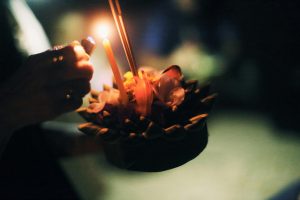
🕯️ How to Make a Traditional Krathong (The Right Way)
My Grandmother’s Recipe (100% Biodegradable)
Base: Slice of banana trunk (about 3 inches thick, 6 inches diameter)
Decoration: Banana leaves folded into cones (watch YouTube, it’s impossible to explain in words)
Securing: Toothpicks or small bamboo pins (NOT staples or wire)
Top decorations: Marigolds, crown flowers, orchids (any real flowers)
Center: One candle, three incense sticks
Personal items: Nail clipping, strand of hair (optional but traditional)
Money: One coin (kids will thank you)
💑 The Romance Factor (What Nobody Tells You)
Here’s the couple traditions tourists don’t know about:
The Krathong Compatibility Test
Couples float their krathongs together and watch what happens. If they float side by side = soulmates. If they drift apart = maybe have that “what are we?” conversation. If one sinks = run, the universe has spoken!
Secret Dating Spots
For young couples: Seri Thai Park has a lake with paddle boats. Rent one, paddle to the middle, float your krathongs where nobody can judge your PDA.
For serious couples: Temples like Wat Prayoon have special couple blessing ceremonies. The monks give you blessed string to tie around each other’s wrists. It’s actually really sweet if you’re into that.
For broke couples: Any temple pond works! Romance doesn’t need to be expensive. Make your own krathong together (bonding activity!) and find a quiet spot. The temple at Ramkhamhaeng Soi 24 is free and never crowded.
🎭 Regional Variations You Won’t Find in Guide Books
The East: Floating Fire Boats
In Roi Et and other Isan provinces, they have “Lai Rue Fai” – fire boats. Imagine a 10-meter long boat made entirely of banana trunk and bamboo, decorated with thousands of candles and incense, floating down the river while ON FIRE (controlled fire, don’t worry). It’s metal as hell and represents burning away community sins.
The whole village contributes to building it, and when it launches, everyone cheers and throws firecrackers. It’s like Viking funeral meets Thai festival. Absolutely insane and I love it.
The South: Chak Phra Festival
Southern provinces combine Loi Krathong with “Chak Phra” – pulling Buddha images on decorated carriages. In Surat Thani, they have boat races during the day, then Loi Krathong at night. The krathongs here are HUGE – like table-sized – and decorated with elaborate scenes from Buddhist stories.
They also have a tradition of “krathong battles” where villages compete for the most beautiful krathong. Some are so elaborate they need multiple people to carry them. It’s like a float parade but on water.
📱 Modern Problems, Modern Solutions
✓ DO’s for Modern Loi Krathong
- • Share krathongs: One per family/group
- • Use natural materials: Banana, bread, or ice
- • Join cleanups: Morning after river cleaning
- • Support local makers: Buy from grandmas, not 7-Eleven
- • Take photos, leave krathongs: Some places retrieve them
- • Learn the meaning: It’s not just pretty lights
✗ DON’Ts That Make Us Cringe
- • No foam krathongs: EVER. Just don’t.
- • No plastic decorations: Glitter is evil
- • Don’t leave immediately: Watch your krathong float
- • No sky lanterns: They kill animals and cause fires
- • Don’t buy from corporate stores: Support communities
- • No krathong selfies only: Respect the ceremony
🍜 What to Eat During Loi Krathong
Festival Foods You’ll Find:
Khao Kriab Pak Moh Sweet rice dumplings in coconut milk
Khanom Tom Coconut balls with palm sugar filling
Miang Kham Leaf wraps with sweet-savory filling
⏰ Timing Your Loi Krathong Night
Perfect Evening Schedule
🚨 Safety and Practical Stuff
🎒 What to Bring
- Lighter (for candles/incense)
- Mosquito repellent (water = mosquitos)
- Small bills for krathongs/donations
- Tissues (no toilet paper at temples)
- Plastic bag for shoes (temples require removing them)
⚠️ Watch Out For
- Pickpockets in crowds
- Slippery riverbanks
- Hot wax from candles
- Overpriced tourist krathongs
- Traffic (worse than usual)
🚕 Transport Tips
- BTS/MRT run late on Loi Krathong
- Grab prices surge (3x normal)
- Walking is often faster
- Bikes are perfect if you have one
- Boats offer special night services
🌺 The Spiritual Side (If You Care)
Look, I’m not super religious, but there’s something magical about Loi Krathong that even cynical teenagers feel. When you light that candle and push your krathong into the water, watching it join thousands of others, each carrying someone’s hopes and regrets… it hits different.
The wishes people make are usually simple: health for family, passing exams, finding love, getting over heartbreak. We joke about it, but secretly, we all make serious wishes. Mine last year was to stop procrastinating. (Update: still working on that.)
🎯 Where NOT to Go (Tourist Traps)
❌ Avoid These Unless You Love Crowds and Overpricing:
- Asiatique: 200 baht for a foam krathong that costs 20 baht elsewhere
- Icon Siam: Beautiful but feels like Loi Krathong Disneyland
- Most hotel celebrations: Sanitized versions for tourists afraid of real Thailand
- Dinner cruises: 2000+ baht to float a krathong from a boat. Just rent a long-tail for 500 baht total!
- Any “VIP Loi Krathong Experience”: If it has VIP in the name, it’s not authentic
💚 The Future of Loi Krathong
Real talk: Loi Krathong is at a crossroads. The old generation wants to preserve tradition, tourists want Instagram content, and young Thais want to save our rivers. Here’s what’s changing:
Government initiatives: Some provinces now ban non-biodegradable krathongs with fines up to 5000 baht. About time!
School programs: Kids learn to make eco-krathongs in art class. My little sister’s school made 100% edible krathongs from rice paper and vegetables.
Tech solutions: Apps that map clean celebration spots, organize group cleanups, and even AR krathongs (weird but harmless).
Community evolution: More communities organizing “dry Loi Krathong” with LED lights instead of candles, reusable decorations, and focusing on cultural performances.
The festival is evolving, and that’s okay. The heart of Loi Krathong – gratitude, letting go, and community – remains the same whether your krathong is made of banana leaves or bread.
💭 Final Thoughts From a Local
Loi Krathong isn’t just about pretty floating lights – it’s about community, reflection, and increasingly, about how we balance tradition with environmental responsibility. Every year, I see more foreigners get it right: making natural krathongs, joining cleanups, understanding the meaning beyond the aesthetic.
If you’re here during Loi Krathong, please don’t just come for photos. Buy a krathong from a local grandmother (they usually make the best ones), learn to fold banana leaves, join a cleanup crew, or at least use natural materials. Our rivers are already struggling – they don’t need more foam and plastic.
The most beautiful part of Loi Krathong isn’t the thousands of lights on the water – it’s seeing communities come together, watching kids make their first krathong with their grandparents, couples making wishes, and yes, even tourists who take time to understand what they’re participating in.
When you float your krathong, you’re not just a spectator – you become part of a tradition that’s hundreds of years old. Respect it, and it will give you a memory that no Instagram post can capture.
See you by the river under the full moon! 🌕
P.S. – If you see university students in matching shirts doing river cleanups at 6 AM the morning after, come help! We usually have extra gloves and free breakfast. The auntie who makes khao tom for volunteers is legendary – worth waking up early for! And yes, we judge people who use foam krathongs. Silently, but intensely. 😊